

Please see below summaries of the progress the University of Oxford has been making towards each stage of the Nature Positive Pledge during 2025:
Summary of baselining:
The University of Oxford is curating different baselines for its estate and for its supply chain.
Ecological surveys are being undertaken to baseline the state of nature on our estate. Key indicator groups are being surveyed, including vegetation, butterflys, pollinators (bees/hoverflys), carabid beetles and great crested newts. This is described in the University’s Biodiversity Action Plan (BAP): https://assets-oxweb.admin.ox.ac.uk/2026-10/BAP_Final.pdf
Supply chain impacts are being estimated through biodiversity footprinting. The initial baseline took place as part of a research paper published in Nature in 2022: https://www.nature.com/articles/d41586-022-01034-1
This baseline has been updated annually up until last year, and is now being reviewed and updated in order to align with emerging methods and guidance.
Summary of target setting at University of Oxford:
The University has an overarching target to meet its nature positive targets by 2035 as described in our environmental sustainability strategy: https://assets-oxweb.admin.ox.ac.uk/2026-07/Environmental%20Sustainability%20Strategy%202026.pdf
Targets for the estate are:
- To increase biodiversity across focus areas by 2035, as described in the biodiversity action plan.
- For all eligible building developments to meet 20% BNG.
The University is in the process of setting more specific supply chain targets.
Summary of key actions for nature:
The key aims for nature in the Environmental Sustainability Strategy are as follows:
- Demonstrate enhanced biodiversity at focus locations on its estate by 2035 (see BAP, linked previously, for more detail on this). This is being delivered through a number of habitat restoration projects in those locations.
- Achieve 20% Biodiversity Net Gain on eligible new developments.
- Follow the mitigation hierarchy through the “Refrain, Reduce, Restore and Renew” approach across projects impacting biodiversity.
- Share biodiversity research and restoration activities through public engagement.
Summary of how we’ve reported our progress publicly:
Progress is reported annually in the University’s financial report: https://www.ox.ac.uk/about/how-we-are-run/governance-finance/finance-funding
Regular updates are also given on our social media accounts on Instagram (@oxfordenvsust) and LinkedIn: https://www.linkedin.com/company/ou-environmental-sustainability-team
Visit our website to find out more: https://www.ox.ac.uk/about/how-we-are-run/sustainability
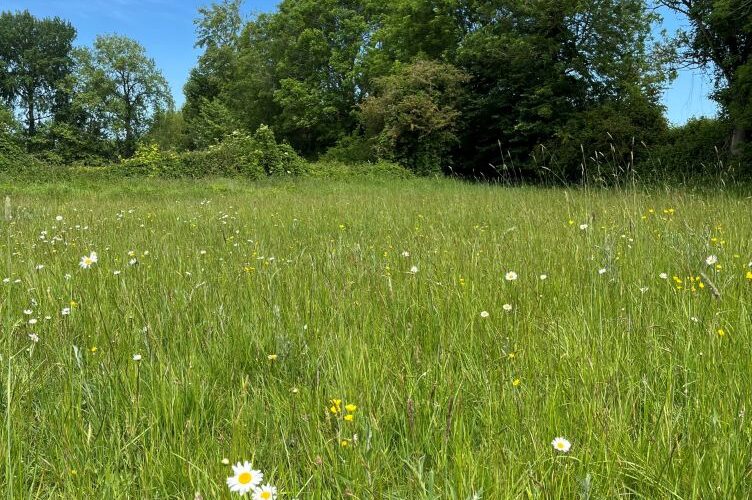
Photo caption: “Park Farm, an ancient hay meadow being restored as part of the University’s efforts to improve biodiversity on the estate.” Credit: University of Oxford
“We are pleased that our efforts to restore biodiversity are being recognised through the NPU verification. This verification gives ourselves, and others, the assurance that we are taking the right steps towards nature positive action. This is a step on a much longer journey towards nature positive target setting and action, and represents the start of a closer partnership between us and NPU. We are proud to be one of the first universities to receive verification from NPU. We take pride in being part of this network of universities from around the world, striving towards a nature positive future.” – University of Oxford, United Kingdom