
Please see below summaries of the progress the University of Jyväskylä (JYU) has been making towards each stage of the Nature Positive Pledge during 2025:
Summary of baselining:
JYU’s baseline for carbon footprint and procurement’s biodiversity footprint is from 2019. During 2025 JYU’s researchers have updated biodiversity footprint methodology and JYU calculated a numerical baseline for campus biodiversity piloting a method for assessing biodiversity of urban environments.
Summary of target setting at JYU:
During 2025 JYU began updating of it’s environmental programme – Roadmap to planetary well-being. The first step was to update the overarching goal together with other Finnish universities. This work led to updated UNIFI’s theses on sustainable development and responsibility. The work has continued by updating JYU’s own targets during 2026.
Summary of key actions for nature:
CAMPUS: During 2025 JYU established new meadows, expanded deadwood habitats, launched a reduced mowing pilot, planted native plants, continued invasive alien species management, did supplementary tree planting, supported species monitoring and habitat management, including surveys of flying squirrel nesting sites. We produced Finland’s first campus-wide ecological condition assessment and natural value hectare calculation.
RESEARCH AND EDUCATION: Biovalent-database, an open database for calculating biodiversity footprints, and New multidisciplinary 25+ credit study module Basic multidisciplinary studies in sustainability transitions, were launched 2025.
Summary of how we’ve reported our progress publicly:
JYU publishes a yearly sustainability report.
Visit our website to find out more: www.jyu.fi/sustainability
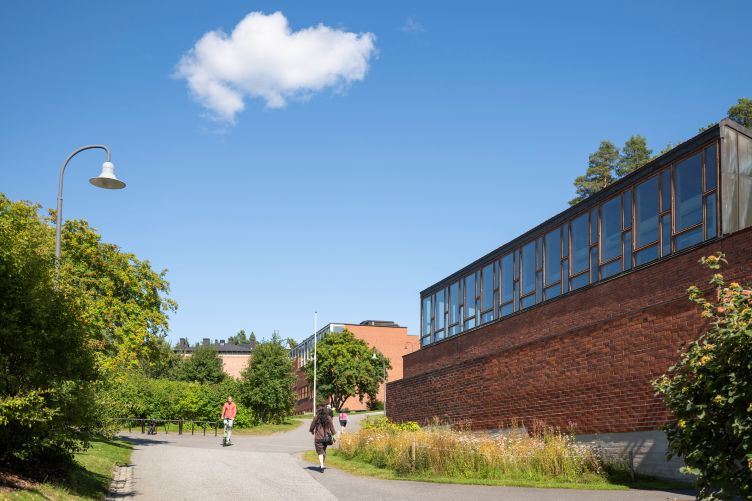
Photo caption: “JYU’s Seminaarinmäki campus holds the EU’s European Heritage Label and UNESCO World Heritage Status”. Credit: University of Jyväskylä.
“We recognize that our commitments must be credible, measurable, and transparent to drive real impact. We see independent external verification as a key element of quality assurance. Verification strengthens accountability, ensures alignment with international frameworks, and increases stakeholder trust.” – University of Jyväskylä, Finland